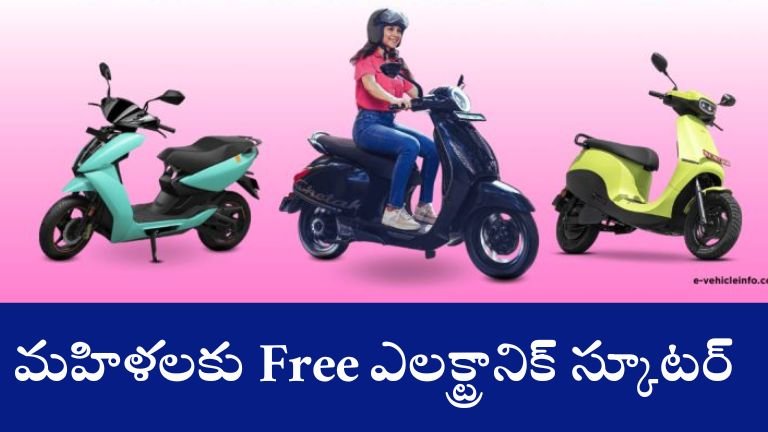
Free Scooty Scheme 2025 : Empowering India’s Girls, One Ride at a Time
In a country where distance and lack of transport often stand between girls and their education, the Free Scooty Scheme is changing the narrative. Launched by several state governments across India, this innovative initiative provides free scooters—petrol or electric—to meritorious female students, helping them continue their studies without transportation barriers.
But this scheme isn’t just about mobility—it’s about freedom, equality, and empowerment. By helping young women reach schools and colleges safely and confidently, the Free Scooty Scheme is creating a generation of independent and educated girls ready to lead India’s future.
Vision and Goals of the Scheme
The Free Scooty Scheme aims to bridge educational and social gaps through mobility empowerment. Its core objectives include:
-
Encouraging academic excellence among girl students.
-
Improving enrollment and retention in higher education.
-
Eliminating transport-related barriers, especially in rural and semi-urban areas.
-
Empowering young women with independence and confidence.
In many parts of India, distance and lack of safe transport remain key reasons for girls dropping out of school. The Free Scooty Scheme directly addresses this issue—turning mobility into a medium of empowerment.
Major State-Wise Free Scooty Schemes
Several states have adopted their own versions of this initiative to encourage female education and empowerment.
1. Uttar Pradesh – Rani Laxmi Bai Yojana
Announced in the 2025–26 state budget with an allocation of ₹400 crore, this scheme rewards girls scoring 75% or above in Class 12. Eligible beneficiaries must be undergraduate students from families with an annual income below ₹2.5 lakh.
Applications can be submitted online via the official Education Department portal.
2. Assam – Pragyan Bharati Scooty Scheme
Launched in 2020 and revamped in 2025, this scheme provides scooters to girls from government schools securing first division (60%+) in Class 12.
Additional benefits include:
-
₹1,000 monthly for hostel or mess expenses.
-
₹50,000 in education loan aid.
Each year, around 20,000 scooters are distributed under this program.
3. Rajasthan – Kali Bai Bheel Medhavi Scooty Yojana
Focused on girls from marginalized and tribal communities, this scheme rewards Class 12 toppers with scooters, helmets, and insurance coverage.
Over 10,500 students benefit annually since its launch in April 2020.
4. Karnataka – Scooty Scheme for Labourers’ Daughters
Girls aged 18 to 40 years, whose parents are registered construction workers, are eligible for either a free electric scooter or ₹50,000 financial assistance.
Applications are processed through the Karnataka Labour Department portal.
Eligibility Snapshot
| State | Marks Required | Income Cap | Beneficiaries |
|---|---|---|---|
| Uttar Pradesh | ≥ 75% (Class 12) | ≤ ₹2.5 lakh | Undergraduate girls |
| Assam | ≥ 60% (Govt Schools) | State norms | Higher education students |
| Rajasthan | Merit-based (Class 12) | ≤ ₹2.5 lakh | College-going girls |
| Karnataka | Not academic-based | Based on labour status | Labourers’ daughters |
How the Scheme Works
-
Application:
Eligible students apply online through respective state portals, submitting marksheets, ID proof, income certificate, and bank details. -
Verification:
Authorities verify academic merit, income, and residency credentials. -
Selection:
Based on merit lists and reservation criteria, shortlisted candidates are informed via SMS or online notifications. -
Distribution:
Approved students receive their scooters (petrol or electric) through authorized dealers. Insurance, helmets, and registration support are included.
Impact and Transformation
The Free Scooty Scheme is far more than a student incentive—it’s a social revolution on wheels.
It has:
-
Increased female enrollment in colleges and technical courses.
-
Reduced dropout rates, especially in rural regions.
-
Promoted eco-friendly transport, with many states shifting toward electric scooters.
-
Reduced family financial burden by saving on daily transport costs.
A student from Assam shared how the scheme helped girls from over 150 villages attend college regularly—showing how a small intervention can create a ripple of positive change across communities.
Free Scooty Application
Challenges and Recommendations
Despite its success, the scheme faces a few challenges:
-
Limited awareness – in remote regions—schools and panchayats must spread more information.
-
Strict eligibility criteria—for example, Assam’s increased 80% cutoff excludes many capable students.
-
Training gaps—many beneficiaries still lack access to basic driving lessons or license assistance.
Suggestions for improvement:
-
Introduce driving training programs for girls before scooter distribution.
-
Simplify the application and verification process.
-
Extend benefits to skill and vocational trainees beyond formal college education.
-
Increase awareness campaigns through schools and local bodies.
Conclusion
The Free Scooty Scheme is more than a government welfare program—it’s a movement for empowerment. By connecting education with mobility, it gives thousands of young women the confidence and means to pursue their dreams.
Every scooter distributed under this initiative represents a girl’s freedom to learn, travel, and grow.
As more states join and strengthen this mission, India moves closer to a future where no girl is forced to quit her education because of distance.